
Home / The Emblem / The method
How the drawings were measured
Every comparison on this site is a number, and a number means nothing without a scale. This page is the board's apparatus: the ruler, the ties between the drawings in the class of evidence each one has, and the drawings kept only for comparison.
The ruler
The July 1912 advertisement is filed twice, as a page render and as a native-resolution crop of the same printing, and the two score 0.975. That is what the same artwork looks like as a measurement, and nothing else in the collection reaches it.
Two independent digitisations of the same July 1912 advertisement. Their score is the noise floor: no pair of genuinely different drawings should be read as 'the same artwork' above it without other evidence.
Measured, not described. Each drawing is reduced to the same thing — the letters BEND, cropped to their own ink — and compared with every other by shape. Then every pair is measured again at four different widths of the ring, because a score that moves when the ring moves is a fact about the ring.
Each pair is measured again at 4 device cuts — 0.96, 0.9, 0.84, 0.78 of the roundel’s interior — and a pair counts as stable only if its score moves less than 0.05 across all four. Of 1081 pairs, 170 hold at all four.
The two groups that hold
The drawing the club used, and what holds with it. The 1912 and 1916 newspaper impressions score 0.930 against each other and barely move when the device is cut differently — the same printing cut, four years apart, just below the 0.975 that two scans of one printing reach. The Bulletin’s own business directory masthead of February 1939 joins them at 0.887 against 1912 and 0.861 against 1916, holding within 0.009 and 0.023 across every cut: the tightest reading anything between 1917 and 2001 has produced, and still short of the same artwork. The museum’s June 2020 drawing sits at about 0.69 against 1912 and 1916, steadily. This is a chain rather than a circle, and the shape of it is worth saying plainly: 1939 and the museum’s 2020 drawing hold with the two period impressions but not with each other — that pair runs 0.612 to 0.700 and crosses the grouping threshold depending on where the device is cut. They are shown together because each of them holds with the 1912 cut, which is what this group claims and all it claims. Bend Park Company, July 1912 · The Bend Bulletin, November 1916 · Bulletin business directory, February 1939 · Deschutes Historical Museum, June 2020
Two files, one artwork. The gold roundel on Downtown Bend’s history page and the museum’s February 2012 artwork score 0.962 against each other and hold that score at every device cut. Two files of one drawing, and the museum is the earlier known holder of it. A third file sat here until 2026-09-14: a gold image found on the internet in March 2022, which measures with these two at 0.954 to 0.959. It is now kept as a reference rather than as a specimen, because where it was found says nothing about where the drawing came from, and a comparison group is a claim about the collection. Downtown Bend gold roundel · Deschutes Historical Museum, 2012
A high steady score says two drawings have the same shape. It does not say who copied whom, or which came first.
Start with the pair the ruler was made for — the highest-scoring distinct pair among the drawings the board plates, at 0.962, which reads as “very close; the same drawing, or one traced from it”.
Measured, and standing alone. Each of these was measured and joins no stable cluster at the global cut. They are not a group; they are 32 separate drawings shown together because that is what one of the two measurements says. Read the character matrix for what each one is made of, and the letter cut for how alike a pair is once the ring is out of the way. Eight were added on 16 September 2026 from the Meta sweep, and not one of them made a stable pair at or above the threshold with anything already here — including the City’s own current mark against the City’s own 2023 neighborhood artwork, which the character matrix places in the same family. Two more were added the same day from the outsized-issue sweep: the Bulletin’s directory masthead as printed on 1 September 1943 and on 24 August 1949. Both are the same block as the 1939 plate, which the character matrix reads identically in all twelve states, and neither scores above 0.52 against anything on file — the 1939 plate included, at 0.557 on the letters. That disagreement is the record: ink weight is what the shape measurement cannot see past, and this masthead is the drawing the handbook already names for it. The count in this sentence had said 29 while the list held 30; it is counted from the list now.
A group this page used to show, and why it is gone
An earlier version grouped the drawings by eye, and measurement replaced those groups. One of them was reported as falsified: the marks shown together as “narrow letters and a capital N” were said to resemble each other less than they resemble the rest of the collection. That sentence was true of one cut and is no longer on this site. Those drawings stand their letters clear of the ring, so a wide cut admits the ring into the word and the score collapses. Read at each drawing’s own letter cut — the widest cut that leaves its ring outside — Downtown Bend’s 2006 file scores 0.92 against Deschutes Brewery where the global cut gives 0.39, the Bend Store sticker 0.91 against Downtown Bend’s 2011 banner, and the City’s two marks 0.83 against each other. The family was there; the cut hid it. The groups above are still built only from the global sweep, which is what makes them comparable across drawings that fill their discs and drawings that do not.
11 drawings could not be measured from the images on hand. Each says why in its caption on the board and in full on its record.
What the frames on the board mean
A dashed frame is a drawing seen in use whose own date is unknown. A gold frame is a weak reading, and where the drawing is small enough that its size is the reason, the number beside its year is how many pixels wide one letter is. A ring means that drawing is tied to the one you picked, in that tie's own class.
What one picture on the board stands for
The board shows 47 pictures of the 58 drawings on file: one for every drawing, and one more for every distinct artwork made from it that the ledger has a sighting of — the letters stitched into knit, cut out of wood, set inside a ring of type. Each picture is the best of its own artwork: a picture at all, then the highest matrix read, then the earliest dated, then the largest device.
A family stops at twelve pictures. Above twelve, the holder with the most in that family loses its latest, one at a time, until twelve remain — a rule about keeping a variety of sources on the page rather than about which picture is best. The bureau roundel lost the most, 6 of them. Nothing is dropped from the archive: what the cap takes off the board is listed in a caption on it, each with its own picture, its own link and its own pick, and the line under the family says how many there were. The deepest caption is City of Bend in the bureau roundel, 6 behind one picture.
What “seen in use” counts
The archive files 65 documented appearances of the emblem, and 47 of them are drawings on the board. The rest are records that name the emblem without carrying a drawing this project can measure — a report of a device, a design brief's own words, a mark the emblem was replaced by — and the 2022 accession, whose two files are in the references below under their own ids. The board's filter counts what it shows, which is one drawing per holder per family: one counts when the archive files any of that holder's drawings in that family as an appearance, or the appearance ledger holds a dated sighting of one.
13 ties: 2 documented, 6 measured, 5 questions
→ documented, and the only descent this site claims · ~ measured · ? a question, with the instrument that would settle it
-
Documented
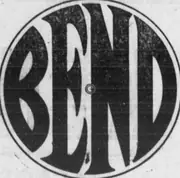 Bend Park Company, July 1912
  BendEmblem.com 1912 reference
 Traced. Traced from the July 3 newspaper specimen, with the documented central-detail omission.
-
Documented
Bend Park Company, July 1912  BendEmblem.com 1912 adaptation
 Redrawn. A new drawing based on the 1912 specimen, with deliberate optical changes.
-
Measured
 Deschutes Historical Museum, 2012
  Downtown Bend gold roundel
 One artwork, two files. The museum’s February 2012 file and the roundel on Downtown Bend’s history page score 0.962 against each other and hold that score at every device cut. Which file came first is not measurable.
-
A question
Bend Park Company, July 1912 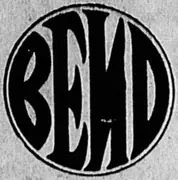 Bend Chamber of Commerce, June 1953
 Redrawn for the Chamber?. The Chamber’s 1953 emblem scores about 0.69 against both period impressions at every cut: the same family, far below the 0.975 control, so a redrawing rather than the same block. Whether whoever drew it had an impression in front of them is unknown.
What would settle it: Part of this has now been run: the Bulletin’s outsized editions were swept for round devices and the paper’s own 1939 directory masthead came out of it, which is a surviving impression in the gap and measures far closer to 1912 than the Chamber’s drawing does. What remains is the sweep’s unopened middle — about 170 outsized issues between 1917 and 1952 are still unswept, and the directory’s own run is sampled at nine dates out of roughly 1,700 — and, for this edge specifically, anything that puts a drawing in the Chamber’s hands rather than the newspaper’s.
-
A question
 O’Kane Building glass, photographed 2012
  The Chamber’s 2001 roundel
 Drawn from the glass?. The glass is the only emblem continuously in public view between 1953 and 2001, on the corner of Bond and Oregon, and it is narrow-lettered like the bureau’s roundel. Anyone redrawing the emblem around 2000 without a 1912 newspaper had the window and little else.
What would settle it: A square-on photograph of every O’Kane transom, entered into the measurement and read at the letters cut against the 2001 roundel, plus the 1985 fabrication record from Bend Stained Glass’s successor saying which panes are 1916 glass.
-
A question
The Chamber’s 2001 roundel  Downtown Bend's earlier circle device, 2011
 The same drawing, one letter changed?. Every narrow drawing on hand, civic and commercial, carries a notched E and a notched B at the same height. The only difference that is not weight, tilt or colour is the third letter: arched in the civic uses, a capital N in the commercial ones.
What would settle it: Downtown Bend’s own answer to who made its earliest file and from what, and the artwork attached to the 2011 LogoTournament brief, which the public contest page does not carry. Either would show whether the capital N was cut into an existing drawing.
-
A question
Bend Park Company, July 1912 Deschutes Historical Museum, 2012 Redrawn from the 1912 or 1916 cut?. Every character of the museum’s drawing matches the period impressions - three-armed E, capital N, letters to the edge - and none matches the narrow families. It scores 0.70 against the 1912 cut, which is family rather than copy.
What would settle it: The Deschutes Historical Museum’s source file and its author, asked of the museum directly. A working file with a 1912 or 1916 scan under it would settle a direction the measurement cannot, and the museum is the first known holder.
-
Measured
 Downtown Bend’s 2006 file
  The Bend Store sticker
 0.91 at the letters cut. Read at the smaller of the two drawings’ own letter cuts, where neither mask holds a ring, these two agree at 0.91. At the global cut the same pair scores 0.37, which is a number about two rings. Neither score says which drawing came first.
-
Measured
Downtown Bend’s 2006 file  Deschutes Brewery, Born in Bend
 0.93 at the letters cut. Read at the smaller of the two drawings’ own letter cuts, where neither mask holds a ring, these two agree at 0.93. At the global cut the same pair scores 0.39, which is a number about two rings. Neither score says which drawing came first.
-
Measured
Downtown Bend’s 2006 file Downtown Bend's earlier circle device, 2011 0.87 at the letters cut. Read at the smaller of the two drawings’ own letter cuts, where neither mask holds a ring, these two agree at 0.87. At the global cut the same pair scores 0.35, which is a number about two rings. Neither score says which drawing came first.
-
Measured
 The City’s roundel alone, 2016
  City of Bend identity
 0.93 at the letters cut. Read at the smaller of the two drawings’ own letter cuts, where neither mask holds a ring, these two agree at 0.93. At the global cut the same pair scores 0.46, which is a number about two rings. Neither score says which drawing came first.
-
A question
Downtown Bend’s 2006 file  Visit Bend’s capital N, 2014
 Visit Bend takes the commercial file?. Visit Bend carried the arched-n roundel from 2001 to at least 2008 and the capital-N drawing by March 2014. Every character of its 2014 roundel matches the file Downtown Bend held in 2006, and the bureau has never published a statement about either drawing.
What would settle it: Visit Bend’s own answer to who drew the mark it adopted, and the artwork file behind the 2014 site theme. The captures between 2008 and 2014 carry the roundel too small to read, so the web cannot close this on its own.
-
Measured
Bend Park Company, July 1912  Bulletin business directory, February 1939
 0.88, steady at every cut. The 1939 directory masthead scores 0.8825 to 0.8916 against the July 1912 advertisement across every device cut — a spread of 0.009, the tightest any pair inside the 1917 to 2001 gap has held. The same-artwork band here is the 0.975 control and the 0.930 the 1916 reprint reaches, so this is the construction and not the block: a drawing of the same letters, not an impression of the same cut.
References, not evidence
A drawing that is not a historical specimen - a modernisation reference, or a second rendering of a mark already filed. Measured, but never grouped as evidence.
-
 2022 Grayson Graham collection
 -
 2022 Grayson Graham collection
 -
 2026 Grayson Graham collection
 -
 2026 Savage Skye Design
This project's own drawings are not here. They are on the files page, which is where you can take them, and they are measured like everything else: the faithful reconstruction and the adaptation each have their card and their numbers.