
Home / Archive / Undated case study
The City of Bend’s emblem
zöagency · Undated case study
This record carries no date and is not plotted along the story. The archive holds it.
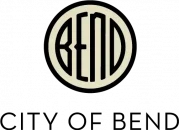
Narrow letters and a heavy circular surround give the municipal emblem a treatment of its own.
Narrow letters and a heavy circular surround give the municipal emblem a treatment of its own. The image here is the one zöagency publishes with its case study for the City.
The case study calls the City’s mark a “legacy” logo, and says the agency refined it. That settles the question this record was filed to leave open: whatever the agency did, it did not originate the drawing. The City’s roundel is documented in this archive inside a landscape badge from March 2002 and standing alone from December 2016, which is two decades before anything on the agency’s site.
Dating it took more than the one query the backlog expected. zöagency’s earliest capture of any kind is 21 December 2020. The page at /city-of-bend/ was captured from 6 June 2023 and is a different project entirely — a website about houselessness — with no logo case study on it. The URL that serves the logo case study now, /case-study-city-of-bend/, has a single capture on 5 March 2026 which does not carry the City logo image either. The text quoted here was fetched from the live page on 15 September 2026. So the case study cannot be shown to exist before 2026, and “undated” remains the honest label.
One line in it is a lead rather than a finding. The agency says it assessed “over 100 different pieces” and reviewed the City’s “entire identity history”. That is a body of research about this archive’s own subject, held by a named firm in Bend, and it is filed as something to ask about rather than something to cite.
From the source
The City of Bend had a legacy logo but no unified brand system—every department was interpreting it differently across dozens of applications. After assessing over 100 different pieces and reviewing their entire identity history, we transformed the chaos into a cohesive brand system that gave each department its own identity within a unified framework.
Measured
The bureau roundel, the notched construction. Narrow letters, a notched E and a notched B at the same height, an arched third letter, and rounded corners.
Read at high confidence from 70 px of letter, which is the letters alone, at this drawing's own letter cut.
Each drawing is reduced to the same thing — the letters BEND, cropped to their own ink, rasterised at a common size — so two of them can be compared by shape alone.
- Device aspect
- 1.000 The roundel’s width divided by its height. 1.000 is a true circle; anything else is an oval, or a photograph taken at an angle. 0.977 – 1.048 across the collection
- Word aspect
- 1.080 The same ratio for the block of BEND letters alone, once cropped to their own ink. 0.927 – 1.862; the high end is lettering set wide rather than stacked
- Figure ink
- 0.378 How much of the drawing is ink rather than ground. A heavy ring and fat letters push it up. 0.169 – 0.728, median 0.493
- Coverage
- 0.327 How much of the normalised square the letters fill once every drawing is reduced to the same size. 0.198 – 0.576, median 0.456
What it most resembles. Two digitisations of a single printing score 0.975, so that is what “the same artwork” looks like as a number.
- The City’s roundel alone, 2016 0.460 — different drawings
- Modernisation reference made with ChatGPT, 2026 0.421 — different drawings
- Bend Chamber of Commerce, June 1953 0.406 — different drawings
Least like it: BendEmblem.com common master, at 0.124.
Resemblance is not descent. A high score means two drawings have the same shape. It does not establish which came first, or that either was copied from the other.
Ties touching this drawing, each in the class of evidence it has:
- Measured 0.93 at the letters cut. Read at the smaller of the two drawings’ own letter cuts, where neither mask holds a ring, these two agree at 0.93. At the global cut the same pair scores 0.46, which is a number about two rings. Neither score says which drawing came first.
Compare this drawing with another · The board · How the drawings were measured