
Home / Archive / February 5, 1921
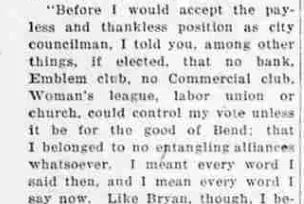
No bank, Emblem club, no Commercial club
The Bend Bulletin · February 5, 1921
In the story: 4. Emblematic measles, 1917–1922.
Drag to pan. Scroll, pinch, or press + and − to zoom. Esc closes.
A city councilman lists the powers in Bend he says cannot own him, and the Emblem Club is the first one after the banks.
The speaker is Councilman C. J. Leverett, on the night the Bend council adopted the woman's protective division ordinance, February 4, 1921. The Bulletin ran him at length the next day under the headline “‘Hell and Damnation' Sermons Advocated by Leverett; Councilman of Distinguished Ancestry”, which tells you the paper's view of him.
For this archive the value is not the man but the list. Asked to name the interests that might try to buy a Bend councilman, he named six: the banks, the Emblem Club, the Commercial Club, the Woman's league, the labor unions and the churches. The Emblem Club comes second, ahead of the Commercial Club — the body that in June 1922 would ask the Emblem Club's permission to use the emblem, and which had itself been reorganised in the Emblem Club's own rooms fifteen months before this.
Almost everything else the archive holds about the club is social: dinners, dances, cups, card parties. This is somebody outside it, in a hostile mood, treating it as a power. A club that nobody thought could lean on a council vote does not get put on that list.
From the source
Before I would accept the payless and thankless position as city councilman, I told you, among other things, if elected, that no bank, Emblem club, no Commercial club, Woman's league, labor union or church, could control my vote unless it be for the good of Bend; that I belonged to no entangling alliances whatsoever. I meant every word I said then, and I mean every word I say now.